
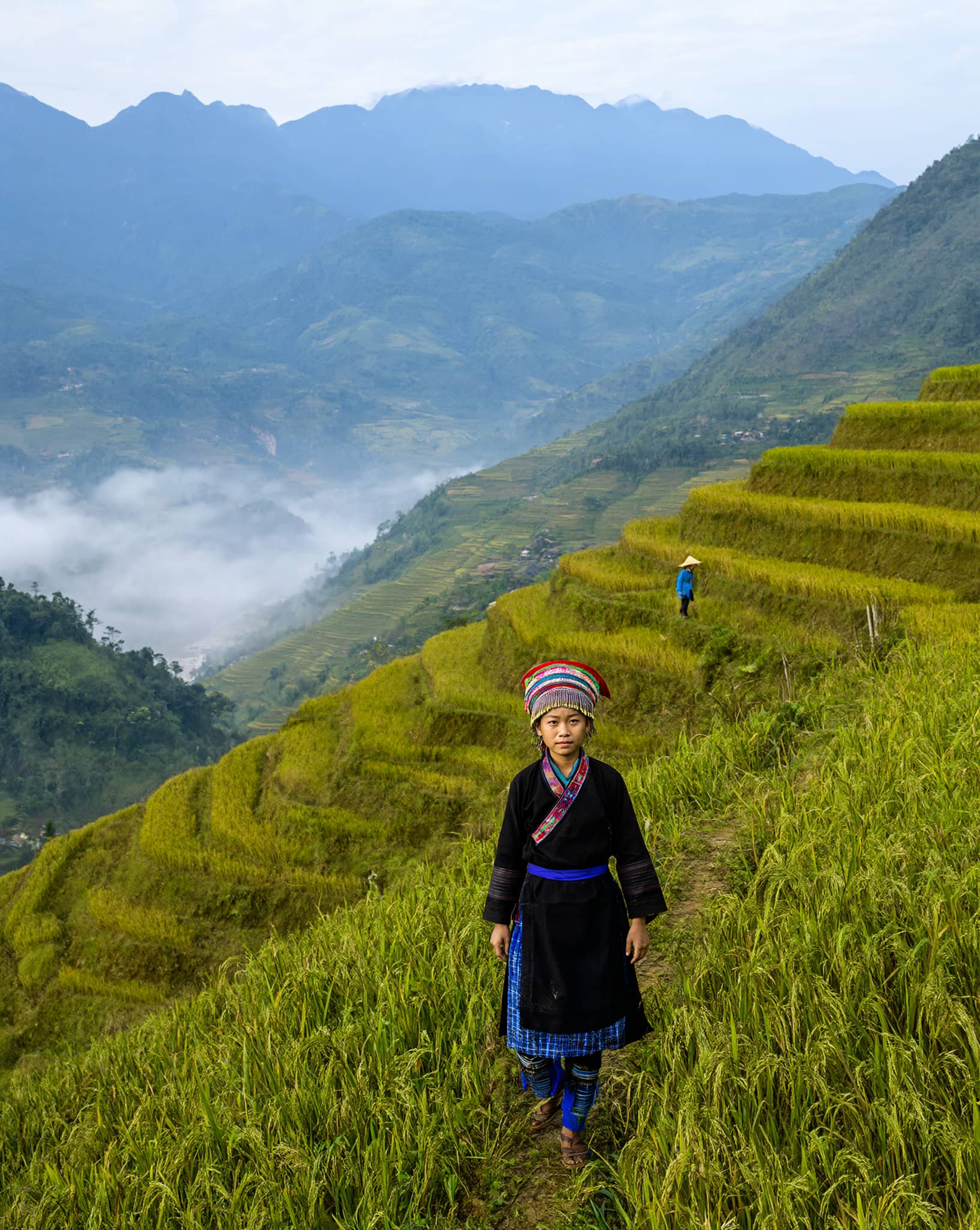
Sapa trekking comes in two shapes. A one-day hike from Sapa town into the Muong Hoa valley (Lao Chai, Ta Van) covers roughly 10-14 km of terraces and Hmong villages and is enough for a taste of the scenery. A two-day trek adds a homestay night with a local family, a longer, quieter route and a second village, and is what most travellers remember. If your knees allow and you have the time, take the two-day version.
Snapshot
- Region
- Northern Vietnam
- Best for
- trekking, solo, couples
- Best season
- Mar-May & Sep-Nov
- Average cost
- $25-120
- Updated
One day or two?
Sapa trekking comes in two shapes. A one-day hike from Sapa town into the Muong Hoa valley (Lao Chai, Ta Van) covers roughly 10-14 km of terraces and Hmong villages and is enough for a taste of the scenery. A two-day trek adds a homestay night with a local family, a longer, quieter route and a second village, and is what most travellers remember. If your knees allow and you have the time, take the two-day version.
Guided vs independent
Guided tours are the norm: local Hmong and Dao women often walk with groups and a guide handles the route, lunch and homestay. Independent trekking is possible but you miss the cultural context and risk getting lost on unmarked trails. Prices typically run about $25-50 for a day hike and $70-120 for a two-day homestay trek including meals.
Difficulty and what to bring
Trails are muddy after rain and involve real ups and downs, so bring grippy shoes, a rain jacket, water and a warm layer for the evening. Days are cool year-round and can be cold and foggy in winter. Agree the price and route up front, and be clear about the “village visit” stops, which sometimes double as craft-selling.
Quick facts
- Short on time: one-day valley hike, about $25-50 including lunch.
- Recommended: two-day trek with homestay, $70-120 with meals and guide.
- Difficulty: moderate; muddy trails and real climbs.
- Bring: grippy shoes, rain jacket, water, warm layer.
Frequently asked questions
Is a one-day or two-day Sapa trek better?
The two-day trek with a homestay is the better experience: a longer, quieter route, a night with a local family and a second village. A one-day hike is fine if you are short on time, covering the main Muong Hoa valley terraces.
How much does a Sapa trekking tour cost?
A guided one-day hike runs about $25-50 including lunch; a two-day homestay trek about $70-120 with meals, guide and accommodation. Prices were checked October 2026 and rise in the March to May and September to November seasons.
How hard is the Sapa trek?
Moderate: expect real climbs and descents and muddy, slippery trails after rain, at 10-14 km a day. With a reasonable level of fitness it is very doable, and guides set a relaxed pace for mixed groups.
Do I need a guide to trek in Sapa?
It is not legally required, but a guide is strongly recommended: trails are unmarked and a local guide adds Hmong and Dao cultural context and manages lunch and homestays. Independent trekkers should carry offline maps and start early.
When is the best time to trek in Sapa?
March to May and September to November: clear terraced views, mild days and the best trekking. June to August is green but wet and hazy with slippery trails; December to February is cold and often fogged in.
Map
The interactive map loads here — JavaScript required.